In Brief: Biophilic design means building natural elements into a workplace, from daylight and greenery to natural materials and open views, so the office supports how people think and feel rather than just looking pleasant. It has moved from a wellness nicety to a business decision because the evidence is unusually good for this field. A field experiment found productivity rose 15 percent once plants were introduced, and a global survey of 7,600 workers linked natural elements to higher wellbeing, creativity and output. This guide walks through what that evidence says, where it is weaker than the industry usually admits, and what to do about the fact that in most Indian cities you cannot simply open a window.
What Biophilic Design Actually Means
Biophilia is the idea that people carry an innate need to connect with the natural world. Erich Fromm coined the term in the 1960s; the biologist Edward O. Wilson popularised it in his 1984 book, and the designer Stephen Kellert later turned it into a set of principles for buildings.
Biophilic design brings those influences into the places where we live and work, treating light, air, materials, greenery and spatial rhythm as working tools rather than decoration.
More Than Plants on a Desk
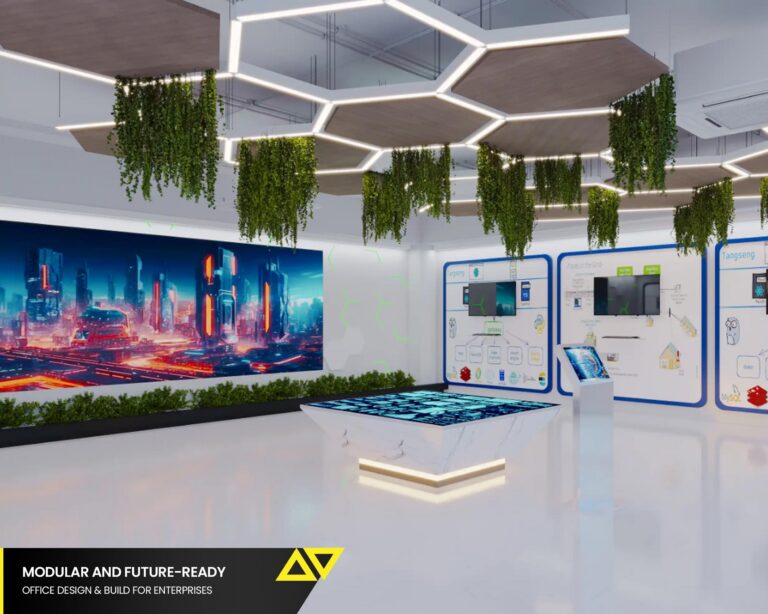
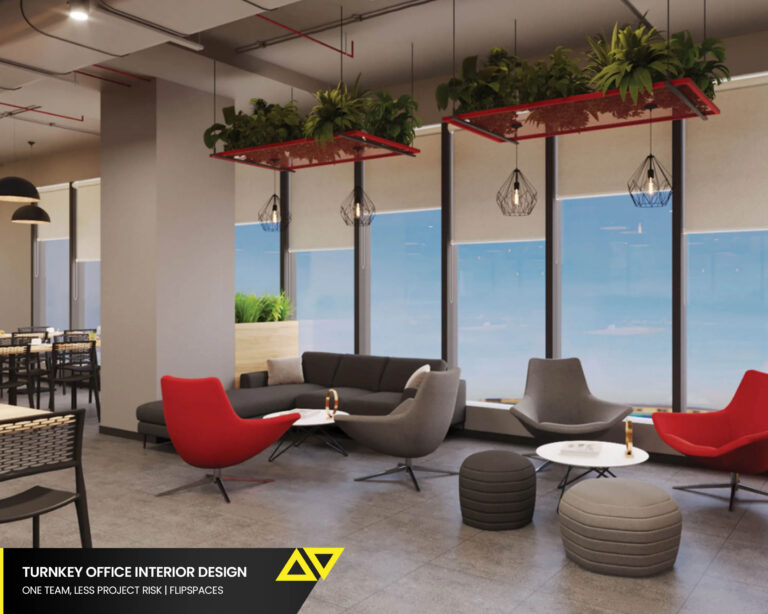
The distinction matters because biophilic work is often reduced to a few pots near the lift lobby, whereas the real thing is structural.
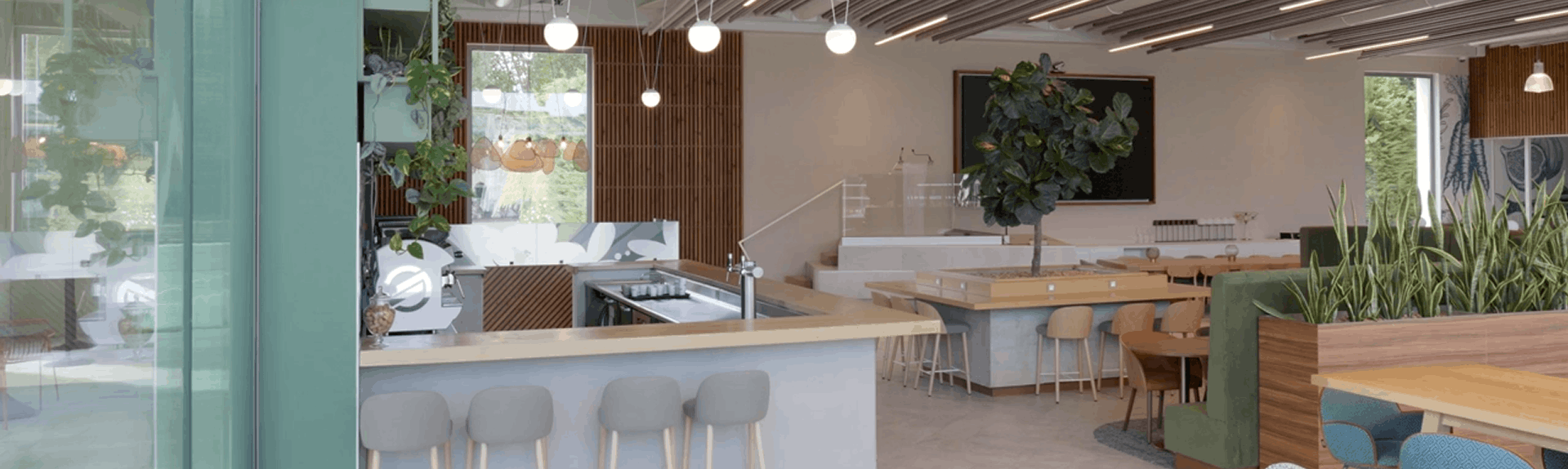
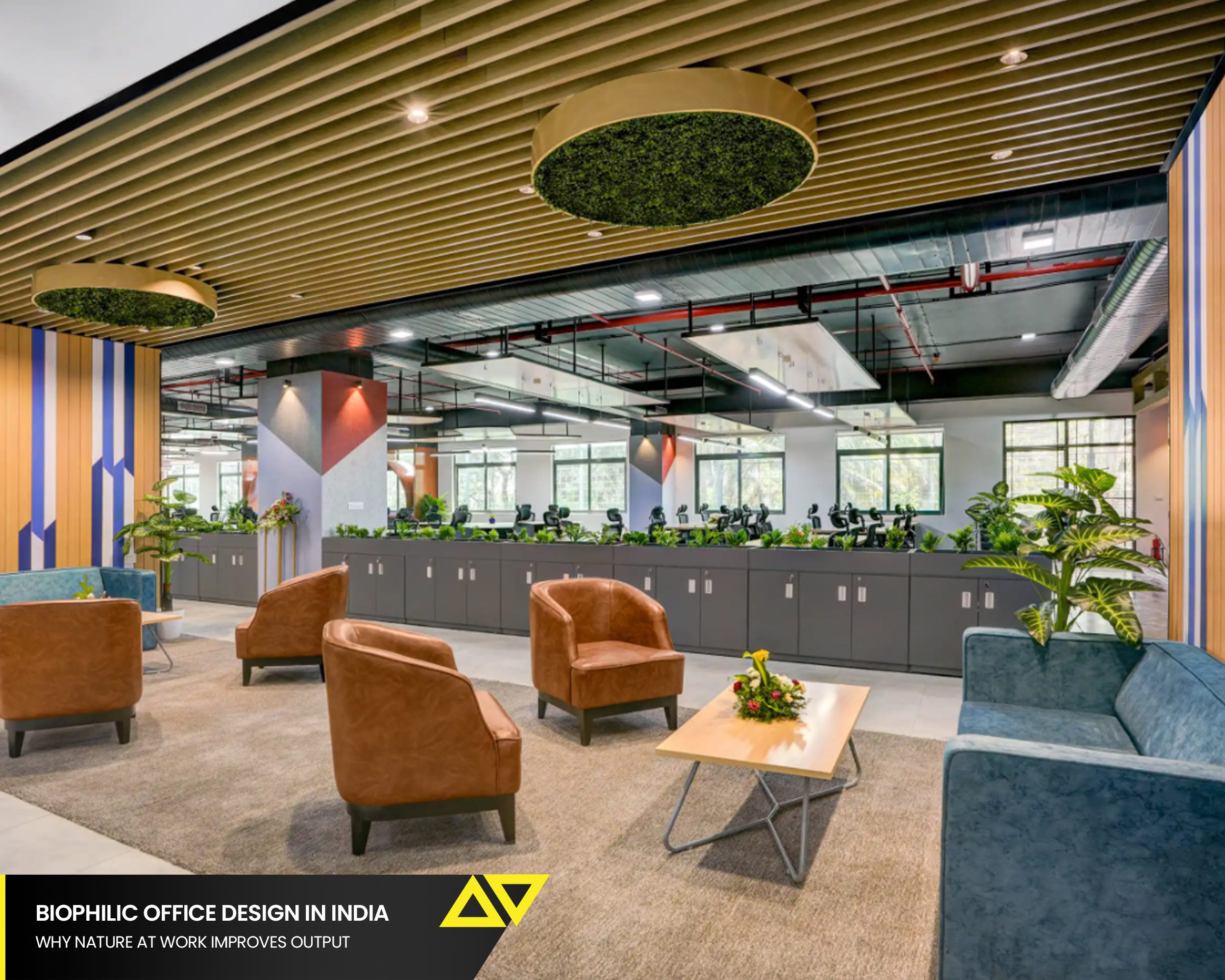
Designers group the strategies into three families. Direct nature covers the tangible living elements: daylight, ventilation, water and planting. Indirect nature covers references to it: timber and stone finishes, organic forms, natural colour. Spatial cues cover how a room makes you feel, offering both open prospect and sheltered refuge so the mind can settle.
The effect compounds when all three are planned together. It largely doesn’t when they’re added piecemeal, which is why a green wall bolted onto an otherwise sealed floor tends to underdeliver.
The Evidence, and Where It Is Thinner Than Advertised
The case for nature at work doesn’t rest on intuition. It rests on studies run in real buildings with real employees. Three findings sit at its centre.
The Productivity Number
The most direct evidence is a set of three field experiments published in the Journal of Experimental Psychology: Applied in 2014, by a team spanning Cardiff, Exeter, Groningen and Queensland. They compared lean offices stripped of decoration against the same spaces enriched with plants, across large commercial offices in the UK and the Netherlands, with over 300 participants. Two of the three studies were longitudinal, tracking effects over subsequent weeks and months rather than a single sitting.
The authors reported that enriching a previously spartan space with plants increased productivity by 15 percent, a figure they noted aligned with earlier laboratory work.
Worth knowing what sits behind that number. Productivity in the third experiment was measured using standardised tasks assessing attention to detail and information processing, chosen in part because the authors observed a shortage of viable alternative measures of productivity. It is a good study. It is not a measure of quarterly business output, and anyone citing it as such is overreaching.
The Global Survey
The Human Spaces report, led by the organisational psychologist Sir Cary Cooper, surveyed 7,600 office workers across 16 countries including India. People working around natural elements reported wellbeing 15 percent higher, creativity 15 percent higher and productivity 6 percent higher than colleagues in barer environments.
Two caveats we would rather state than have a reader discover. The report was commissioned by Interface, a commercial flooring manufacturer, which does not make the findings wrong but is a disclosure any evidence-led article should make. And the data is self-reported and correlational, so it shows association rather than proving cause.
The Recovery Study That Started It
The most striking evidence is also the oldest, and it didn’t come from an office. In 1984, Roger Ulrich published a study in Science following surgical patients recovering in near-identical hospital rooms, where the only meaningful difference was the window view. One group looked out at a small stand of trees; the other, at a brick wall. The patients who could see the trees recovered faster, needed fewer strong painkillers and drew fewer negative notes from nursing staff.
That paper helped launch decades of research into how surroundings shape how we function. It is worth being precise about what it does and doesn’t tell us. It is powerful evidence that a natural view affects physiological recovery. It is not, on its own, evidence about office productivity. The link between the two is an inference, and a reasonable one, but an inference.
The evidence at a glance
Study | What it measured | Headline finding
Nieuwenhuis et al., Journal of Experimental Psychology: Applied, 2014 | Lean versus green offices, three field experiments, UK and Netherlands, 300-plus participants | Productivity rose 15 percent after plants were added
Human Spaces report, 2015 | Survey of 7,600 office workers across 16 countries | 15 percent higher wellbeing, 15 percent more creative, 6 percent more productive
Ulrich, Science, 1984 | Post-surgical recovery by window view | Faster recovery, fewer strong painkillers with a natural view
Why Nature Changes How We Work
Knowing that nature helps is useful. Knowing why lets you design for it on purpose. Two mechanisms explain most of the effect.
Attention Restoration
Focused work draws on directed attention, the effortful concentration that screens, spreadsheets and meetings demand. That resource is finite, and it fatigues over the course of a day.
Natural scenes engage a softer, more effortless kind of attention, which lets the directed system rest. This is why a few minutes spent looking at greenery or out a window with a natural view leaves people noticeably sharper. The office isn’t asking the brain to switch off. It’s giving it somewhere to refuel between demanding tasks.
Stress and the Nervous System
Nature also acts on the body’s stress response. Views of vegetation and water are consistently linked to lower physiological stress, calmer heart rates and a quicker return to baseline after pressure, a pattern Ulrich’s patients first hinted at.
For an employer, that biology shows up as steadier concentration and teams that hold together better when deadlines tighten.
What to Spend On First
Plenty of biophilic writing lists every sensory channel available and leaves you to guess which ones matter. The evidence is uneven across them, so here is the honest ranking, strongest support first.
Daylight, before anything else
Natural light was the single most requested workplace feature in the Human Spaces study, ahead of live plants, quiet working space and colour. It is also the element with the widest supporting literature and the one that is hardest to retrofit, since it depends on orientation, glazing and where you put the enclosed rooms. Get the daylight strategy wrong at the planning stage, and no amount of planting can fix it.
The measurable version of this is what percentage of the usable floor area receives adequate daylight, and for what share of occupied hours. That is a number worth putting in a brief and testing against, rather than a general aspiration.
Views out, particularly of vegetation
The Ulrich work and everything downstream of it points at views rather than proximity. Which means the argument about who gets the window seat is a design decision, not a hierarchy one. Perimeter glazing given over entirely to enclosed offices is the most common way this gets thrown away.
Planting that will actually survive
Plants carry the strongest single experimental result of anything in this article. They also die, and a dead or plastic green wall does more reputational damage than no green wall at all. Specification for an air-conditioned, sealed floor plate with limited daylight penetration is a different exercise from choosing what looks best on a moodboard, and maintenance has to be someone’s job.
Materials and spatial rhythm
Timber, stone, and natural textures have a real effect, and the evidence supports moderation rather than saturation. A space finished predominantly in wood reads as domestic rather than focused. Alongside materials, a plan that offers both open prospect and sheltered refuge is the combination the nervous system reads as safe.
Sound and water, where the budget and the building allow
Both have support, and both are genuinely pleasant, but they sit below the four above on return per rupee, and water features carry a maintenance and hygiene obligation that outlives the enthusiasm that specified them.
The Part That Works Differently in India
Most biophilic writing is imported from markets where opening a window is a viable strategy. In much of urban India it isn’t, for weeks or months of the year.
That changes the brief rather than cancelling it, and it is the single biggest departure from international literature.
Natural ventilation, as a headline strategy, has to give way to filtered, well-designed mechanical ventilation, with fresh-air rates and filtration deliberately specified rather than left at code minimum. Real-time indoor air quality monitoring belongs in the same conversation, because the biophilic promise of clean air is only credible if someone can see whether it is being met.
The biophilic experience then has to be carried by daylight, views, planting and materials rather than by an open window. Indoor planting must be specified to ensure what will survive on a sealed, air-conditioned floor plate. And the visual connection to the outdoors becomes more valuable precisely because the physical connection is restricted.
There is a talent dimension too, and India is an outlier on it. In the Human Spaces study, 67 percent of Indian respondents said office design would affect their decision about where to work, against 33 percent globally, one of the highest figures in the survey. In a competitive hiring market, an office that visibly supports focus and wellbeing is a recruitment asset as much as a productivity one.
How Flipspaces Designs With Nature in Mind
We treat biophilic thinking as part of the brief rather than a decorative layer at the end, so daylight, views, planting and the balance between open and sheltered space get considered while the plan is still moving.
Because so much of the benefit depends on light and sightlines, VIZWALK puts the client inside the space in a changeable 3D environment before construction. That makes it far easier to see where nature will actually reach people, rather than where it looks good on a plan. Planting and material choices are then specified through VIZCART, so what gets drawn is something that can actually be sourced and maintained.
As a sustainable workplace design company working across offices, retail, hospitality, healthcare, and food and beverage in India and abroad, our aim in a biophilic project is for the greenery, light, and layout to do measurable work rather than sit there looking green.
Nature at Work Is Infrastructure, Not Decoration
The evidence has outgrown the debate, even if it hasn’t settled every question inside it.
Biophilic design isn’t a styling choice layered on at the end of a fit-out. It’s a lever on how well people think, feel and perform every day they’re in the building. The studies vary in strength, and the honest position is that the direction is clear while the precise percentages are indicative rather than guaranteed. That is still a far better evidence base than most things that get specified in an office.
The organisations treating nature as core infrastructure rather than surface polish are the ones getting the fullest return from their space.
If you’re planning an office and want its greenery, light and layout to do real work rather than look the part, get in touch with the Flipspaces team.